
Ti capita mai di sentirti un po' confuso quando devi decidere se usare il Present Simple o il Present Continuous in inglese? Non sei solo! Molti studenti di inglese, ad ogni livello, incontrano difficoltà con questi due tempi verbali, che a volte sembrano sovrapporsi. La buona notizia è che, con un po' di pratica e qualche chiarimento, potrai padroneggiarli senza problemi.
In questo articolo, non solo vedremo le regole fondamentali, ma ti proporrò anche una serie di esercizi pratici, pensati appositamente per aiutarti a fissare i concetti e a sciogliere ogni dubbio. Preparati a mettere alla prova le tue conoscenze e a diventare un vero esperto del Present Simple e del Present Continuous!
Present Simple: Le Basi Essenziali
Il Present Simple è un tempo verbale che usiamo per descrivere azioni abituali, fatti generali, verità universali e programmi o orari stabiliti. Pensalo come il tempo della routine e delle certezze.
Ecco alcuni esempi:
- I drink coffee every morning. (Bevo caffè ogni mattina - abitudine)
- The sun rises in the east. (Il sole sorge a est - verità universale)
- The train leaves at 9:00 AM. (Il treno parte alle 9:00 - orario stabilito)
Ricorda la terza persona singolare (he, she, it): il verbo prende una -s o -es.
Esempio:
- He plays the guitar.
- She watches TV in the evening.
Per formare la forma negativa e la forma interrogativa, usiamo gli ausiliari do e does.
Esempi:
- I do not (don't) like vegetables.
- Do you speak Italian?
- He does not (doesn't) play tennis.
- Does she work here?
Present Continuous: Azioni in Corso e Cambiamenti
Il Present Continuous (o Present Progressive) si usa per descrivere azioni che stanno accadendo in questo momento, azioni temporanee, piani futuri (spesso con avverbi di tempo) e situazioni in cambiamento.
Ecco alcuni esempi:
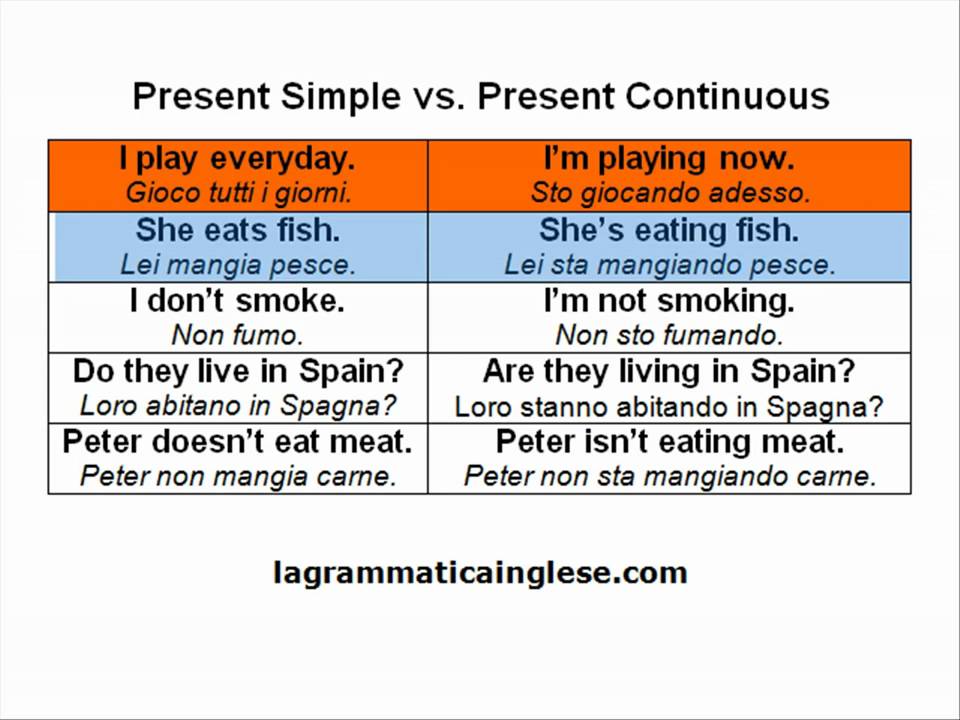
- I am writing an email right now. (Sto scrivendo un'email in questo momento)
- They are studying for their exams. (Stanno studiando per i loro esami - azione temporanea)
- We are going to Italy next summer. (Andremo in Italia la prossima estate - piano futuro)
- The climate is changing rapidly. (Il clima sta cambiando rapidamente - situazione in cambiamento)
La forma del Present Continuous è composta da: soggetto + verbo essere (am, is, are) + verbo principale in -ing.
Esempio: I am eating, he is playing, they are working.
La forma negativa si forma aggiungendo not dopo il verbo essere.
Esempio: I am not working, he is not playing, they are not eating.
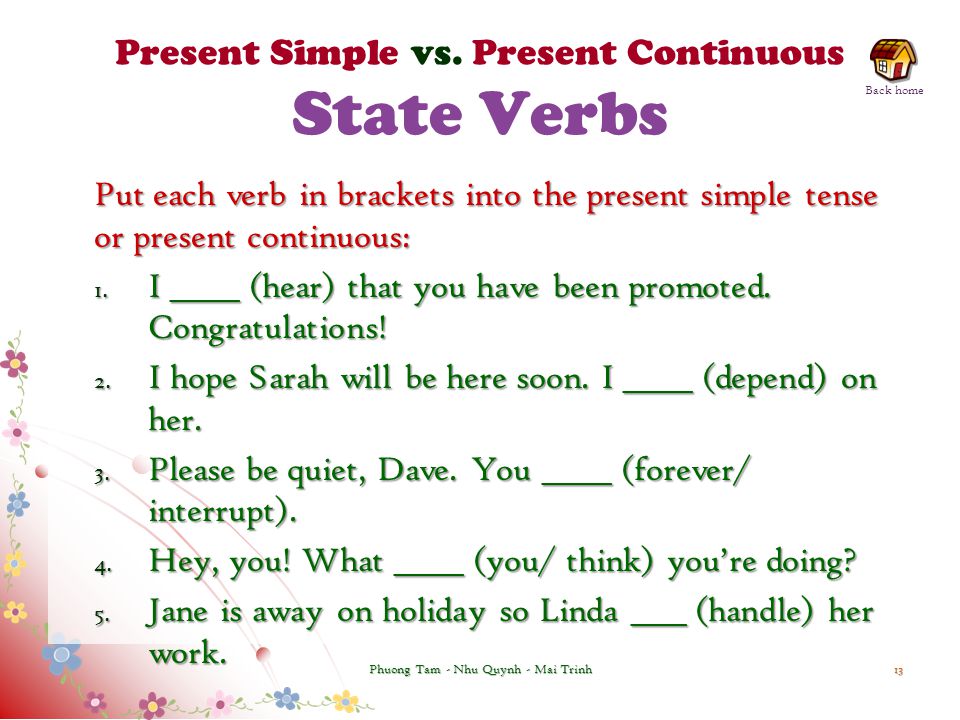
La forma interrogativa si forma invertendo l'ordine del soggetto e del verbo essere.
Esempio: Am I working? Is he playing? Are they eating?
Esercizi Pratici: Mettiti alla Prova!
Ora che abbiamo ripassato le regole, è il momento di mettere in pratica le tue conoscenze con alcuni esercizi. Cerca di rispondere senza guardare le soluzioni subito! Concentrati sul significato della frase per capire quale tempo verbale è più appropriato.
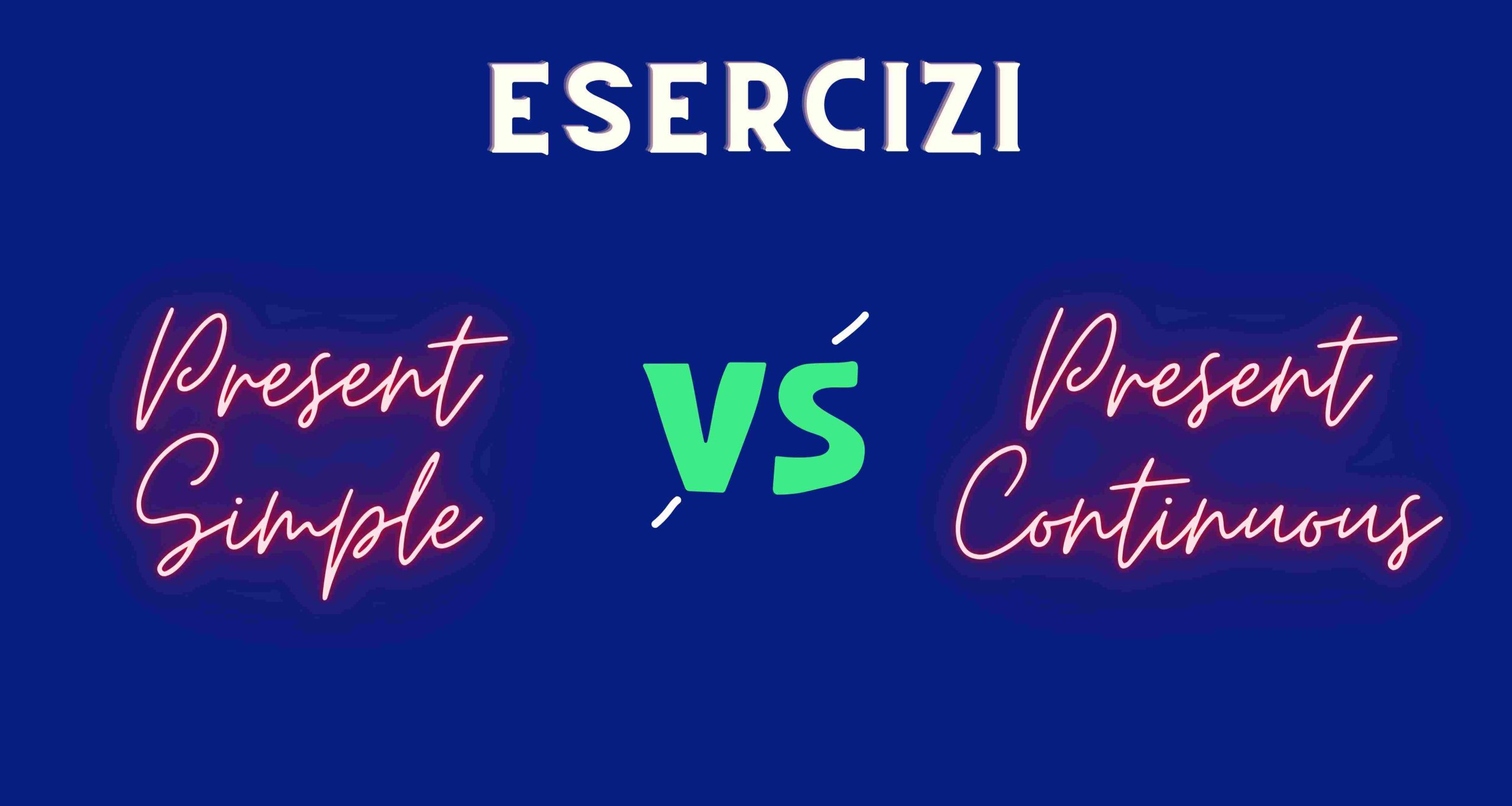
Esercizio 1: Completa le Frasi con il Present Simple o Present Continuous
Scegli tra la forma corretta del verbo al Present Simple o al Present Continuous:
- I usually ________ (drink) coffee in the morning, but today I ________ (drink) tea.
- She ________ (work) at a bank. She ________ (not / work) today because it's Sunday.
- He ________ (play) football every Saturday. He ________ (play) right now.
- They ________ (live) in Rome. They ________ (consider) moving to Milan.
- Water ________ (boil) at 100 degrees Celsius. The water ________ (boil) now. Be careful!
- My brother ________ (study) medicine. He ________ (study) hard for his exams this week.
- We ________ (go) to the cinema tonight. It ________ (start) at 8 PM.
- The population of the world ________ (increase) rapidly.
- Look! The birds ________ (fly) south for the winter.
- I ________ (not / understand) what you ________ (say).
Esercizio 2: Traduci le Frasi in Inglese Usando il Tempo Verbale Corretto
Traduci le seguenti frasi in inglese, prestando attenzione a quale tempo verbale è più appropriato (Present Simple o Present Continuous):
- Di solito vado a letto tardi, ma stasera vado a letto presto.
- Lei parla francese e italiano.
- Stanno costruendo una nuova casa qui vicino.
- Il sole tramonta a ovest.
- Stiamo pensando di comprare una macchina nuova.
- Lui guarda la televisione ogni sera.
- L'aereo decolla alle 10:00.
- Sta piovendo molto oggi.
- Non mi piace il caffè.
- Stai studiando inglese adesso?
Esercizio 3: Correggi gli Errori (se presenti)
Alcune delle seguenti frasi contengono errori nell'uso del Present Simple o Present Continuous. Trova e correggi gli errori:
- I am usually go to bed at 10 PM.
- She is liking chocolate ice cream.
- He play tennis every week.
- They are live in Paris since five years.
- Water is freezing at zero degrees Celsius.
- I am not understand you.
- Do you are enjoying the party?
- She is always complaining about the weather.
- The train is leaving at 7:00 AM tomorrow.
- He is studying hard for his exams normally.
Soluzioni degli Esercizi
Controlla le tue risposte con le soluzioni qui sotto. Non preoccuparti se hai sbagliato qualcosa, l'importante è imparare dai propri errori!
Soluzioni Esercizio 1:
- drink / am drinking
- works / isn't working
- plays / is playing
- live / are considering
- boils / is boiling
- studies / is studying
- are going / starts
- is increasing
- are flying
- don't understand / are saying
Soluzioni Esercizio 2:
- I usually go to bed late, but I am going to bed early tonight.
- She speaks French and Italian.
- They are building a new house nearby.
- The sun sets in the west.
- We are thinking about buying a new car.
- He watches television every evening.
- The plane takes off at 10:00 AM.
- It is raining a lot today.
- I don't like coffee.
- Are you studying English now?
Soluzioni Esercizio 3:
- I usually go to bed at 10 PM. (was: I am usually go)
- She likes chocolate ice cream. (was: is liking)
- He plays tennis every week. (was: play)
- They have lived in Paris for five years. (Alternatively: They are living in Paris currently, implying it's temporary) (was: are live)
- Water freezes at zero degrees Celsius. (was: is freezing)
- I don't understand you. (was: am not understand)
- Are you enjoying the party? (was: Do you are)
- Correct.
- Correct.
- He normally studies hard for his exams. (was: is studying hard for his exams normally). The placement of "normally" is awkward; better to move it.
Consigli Extra per Padroneggiare Present Simple e Continuous
- Ascolta attentamente: Presta attenzione a come i madrelingua usano questi tempi verbali in conversazioni, film e serie TV.
- Leggi molto: Leggere libri, articoli e blog in inglese ti esporrà a un uso corretto e naturale di questi tempi verbali.
- Parla, parla, parla!: Non aver paura di fare errori! Più parli, più ti sentirai a tuo agio con l'inglese e meno errori farai. Trova un partner di conversazione o partecipa a un gruppo di studio.
- Utilizza risorse online: Esistono tantissime risorse online gratuite che possono aiutarti a migliorare la tua grammatica inglese, tra cui siti web, app ed esercizi interattivi.
- Cerca le parole segnale: Alcune parole o espressioni (avverbi di frequenza come always, usually, often per il Present Simple e avverbi di tempo come now, at the moment, today per il Present Continuous) possono darti un indizio su quale tempo verbale usare.
Ricorda, imparare una lingua richiede tempo e impegno. Non scoraggiarti se all'inizio ti sembra difficile. Con la pratica costante e la determinazione, raggiungerai i tuoi obiettivi e parlerai inglese con sicurezza e fluidità!