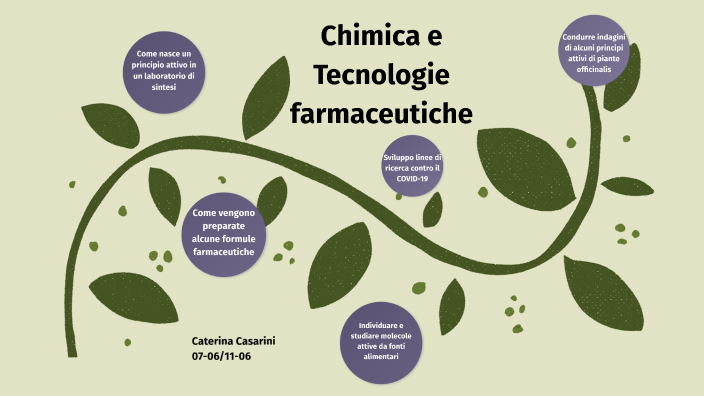
If you're a student considering your future, or perhaps a professional looking to pivot into a dynamic and impactful field, the world of pharmaceuticals might feel a little daunting. You've likely heard terms like "drug discovery," "formulation," and "regulatory affairs," and they might sound like exclusive club jargon. But at its heart, the field of Chimica e Tecnologie Farmaceutiche (Pharmaceutical Chemistry and Technology) is about solving some of the most fundamental human needs: healing, prevention of disease, and improving quality of life. It's a journey from a tiny molecule to a life-saving medicine, and understanding this process is key to appreciating its immense value.
Perhaps you're wondering, "What exactly does a pharmaceutical chemist do?" Or maybe you're thinking, "Is this field right for me if I'm not a chemistry whiz?" These are perfectly valid questions, and the truth is, this field is a beautiful tapestry woven from many threads. It's not just about test tubes and beakers; it's about innovation, problem-solving, and ultimately, making a tangible difference in people's lives. This article aims to demystify Chimica e Tecnologie Farmaceutiche, offering a clear and accessible overview of what it entails and why it's such a critical area of study and professional pursuit.
The Foundation: From Molecule to Medicine
At its core, Chimica e Tecnologie Farmaceutiche is the science that bridges the gap between fundamental chemical and biological knowledge and the development of effective and safe pharmaceutical products. It's a multidisciplinary field that draws heavily from chemistry, biology, pharmacology, engineering, and even material science.
The journey of a new drug is a long and intricate one. It often begins with drug discovery. This is where scientists, often chemists, meticulously search for new chemical entities or biological molecules that have the potential to treat a specific disease. They might be looking for a compound that can inhibit an enzyme involved in cancer growth, or perhaps a molecule that can bind to a receptor to alleviate pain. This initial phase is incredibly challenging and relies on a deep understanding of organic chemistry, medicinal chemistry, and biochemistry.
Once a promising candidate molecule is identified, the work of a pharmaceutical chemist truly begins. They are responsible for optimizing the molecule's structure to enhance its potency (how effective it is at low doses), selectivity (how well it targets the desired biological pathway without affecting others, thus minimizing side effects), and pharmacokinetic properties (how the body absorbs, distributes, metabolizes, and excretes the drug). This process is iterative and requires a sophisticated understanding of structure-activity relationships – how changes in a molecule's structure affect its biological activity.
The Art of Formulation: Making Drugs Usable
Discovering a potent molecule is only the first hurdle. The next critical stage is drug formulation. Think about it: a powerful drug compound is useless if it can't be delivered to the body in a way that is effective, stable, and acceptable to the patient. This is where tecnologie farmaceutiche (pharmaceutical technology) comes into play.

Pharmaceutical technologists are the architects of the final drug product. They design and develop the dosage forms we are all familiar with: tablets, capsules, injections, creams, inhalers, and more. This involves selecting the right excipients – inactive ingredients that play crucial roles in the drug's performance. These excipients can act as binders to hold tablets together, disintegrants to help them break down in the stomach, fillers to add bulk, or coatings to control the drug's release.
Consider the challenge of creating a controlled-release tablet. The goal here is to release the active drug slowly over an extended period, reducing the need for frequent dosing and potentially improving patient adherence. This requires a deep understanding of physical chemistry, material science, and engineering principles to design the matrix or coating that governs the drug's dissolution rate. For example, a tablet might be embedded in a polymer matrix that slowly erodes in the body, releasing the drug gradually.
Furthermore, stability is paramount. Pharmaceutical technologists must ensure that the drug product remains safe and effective throughout its shelf life. This involves understanding degradation pathways, identifying appropriate packaging, and conducting rigorous stability studies under various environmental conditions. A drug that degrades quickly would be a public health risk.
Beyond the Bench: The Wider Pharmaceutical Landscape
The role of a Chimica e Tecnologie Farmaceutiche graduate extends far beyond the laboratory bench. The pharmaceutical industry is a highly regulated sector, and understanding these regulations is as crucial as understanding chemical synthesis.
Regulatory Affairs: Ensuring Safety and Efficacy
Regulatory affairs is a critical function within any pharmaceutical company. Professionals in this area are responsible for navigating the complex regulatory landscape and ensuring that new drugs meet the stringent requirements of health authorities like the Food and Drug Administration (FDA) in the US or the European Medicines Agency (EMA) in Europe. This involves preparing and submitting dossiers that detail the drug's development, manufacturing, clinical trial results, and quality control procedures.
The process of gaining approval for a new drug is notoriously long and expensive. It typically involves several phases of clinical trials to assess safety and efficacy in humans. A report by the Tufts Center for the Study of Drug Development estimates that the average cost to develop a new prescription drug can exceed $2.6 billion and take over 10 years. Professionals in regulatory affairs play a vital role in compiling the evidence and communicating with regulatory bodies to facilitate this process.

Quality Control and Assurance: The Guardians of Good Manufacturing
Quality control (QC) and quality assurance (QA) are non-negotiable aspects of pharmaceutical manufacturing. QC departments are responsible for testing raw materials, in-process samples, and finished products to ensure they meet predefined specifications. This involves a wide array of analytical techniques, from simple titrations to sophisticated chromatography and spectroscopy.
QA, on the other hand, focuses on the systems and processes that ensure quality is built into every stage of drug development and manufacturing. This includes establishing and maintaining Good Manufacturing Practices (GMP), which are a set of guidelines that ensure products are consistently produced and controlled according to quality standards. Adherence to GMP is essential for preventing contamination, mix-ups, and errors.
Imagine a scenario where a batch of tablets is found to have an incorrect dose of the active ingredient. This could have serious consequences for patients. QC ensures such deviations are detected, while QA ensures the systems are in place to prevent them from happening in the first place.
Career Pathways: Where Can You Go?
A degree in Chimica e Tecnologie Farmaceutiche opens doors to a diverse range of career opportunities, both within the pharmaceutical industry and in related fields.
- Research and Development (R&D): This is where the magic of discovering and developing new drugs happens. Roles include medicinal chemists, formulation scientists, process chemists, and analytical chemists.
- Manufacturing and Production: Ensuring that drugs are produced efficiently, safely, and to the highest quality standards. This involves roles in production, process development, and quality control.
- Regulatory Affairs: Working with health authorities to gain approval for new drugs and ensure ongoing compliance.
- Quality Assurance and Quality Control: Safeguarding the quality and integrity of pharmaceutical products.
- Pharmacovigilance: Monitoring the safety of medicines after they have been marketed and collecting data on adverse events.
- Sales and Marketing: While not directly science-based, a strong understanding of the science behind the drugs is crucial for effective communication and promotion.
- Academia and Research Institutions: Contributing to the fundamental knowledge base and educating the next generation of pharmaceutical scientists.
The demand for skilled professionals in this field remains consistently high. The global pharmaceutical market is projected to reach over $2 trillion by 2027, according to Statista. This growth is driven by an aging global population, the rise of chronic diseases, and ongoing innovation in drug discovery.
Is This Field for You?
If you are someone who is curious about how things work at a molecular level, enjoys solving complex problems, has a meticulous approach to detail, and is driven by a desire to make a positive impact on human health, then Chimica e Tecnologie Farmaceutiche could be an incredibly rewarding path for you. It requires a strong foundation in science, but more importantly, it demands perseverance, critical thinking, and a commitment to lifelong learning. The field is constantly evolving with new technologies and scientific discoveries, making it an intellectually stimulating and dynamic environment.
The challenges are significant – developing a new drug is a marathon, not a sprint, and requires immense dedication. However, the satisfaction of contributing to a treatment that alleviates suffering or saves lives is immeasurable. It’s a field where scientific rigor meets a profound sense of purpose, and where innovation has the power to truly change the world, one molecule at a time.