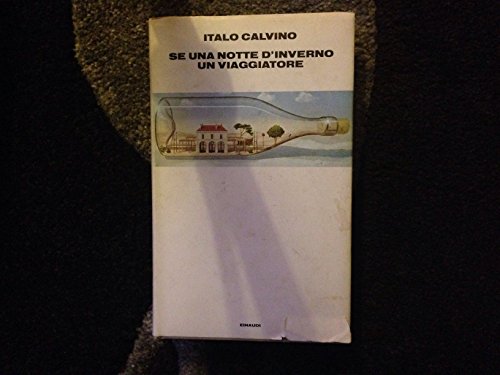
Italo Calvino's Se una notte d'inverno un viaggiatore (If on a winter's night a traveler), published in 1979, is more than just a novel; it's a complex and playful exploration of reading, narrative structure, and the relationship between the reader, the author, and the text itself. This metafictional masterpiece deconstructs the traditional novelistic experience, inviting the reader to actively participate in the creation and interpretation of meaning. The novel's experimental structure and profound themes have cemented its place as a cornerstone of postmodern literature.
Il Meta-Romanzo e il Gioco Narrativo
Se una notte d'inverno un viaggiatore is a prime example of a meta-romanzo, a novel that is self-aware and constantly draws attention to its own artifice. The narrative begins with "You," the reader, attempting to read Italo Calvino's new novel, "If on a winter's night a traveler." However, due to a printing error, you receive a copy that repeats the first chapter and then abruptly stops. This sets off a chain of events where you, in pursuit of the "real" continuation, are introduced to a series of incomplete and disconnected first chapters of other novels, each written in a different style and genre.
This constant interruption and redirection are not accidental. Calvino is deliberately frustrating the reader's expectations of a linear narrative. He is forcing the reader to confront the act of reading itself, to question the assumptions we bring to a text, and to acknowledge the role of chance and contingency in shaping our understanding. The reader is no longer a passive recipient of a pre-determined story, but an active participant in the creation of meaning. Think of it as a literary choose-your-own-adventure, but instead of choosing plot points, you are constantly navigating different literary styles and perspectives.
L'importanza del Lettore
The novel's use of the second-person narrative ("You") is crucial. It directly implicates the reader, blurring the lines between fiction and reality. "You" are not just reading about someone else's experience; you are the protagonist, experiencing the frustrations and challenges of the text firsthand. This technique creates a unique sense of immediacy and engagement. The reader's desires, expectations, and interpretations are directly addressed and interrogated.
Furthermore, the reader's journey mirrors the author's own. Just as the reader struggles to find a complete and coherent narrative, the author (implied, but never fully revealed) grapples with the complexities of creating and controlling a story. This parallel highlights the symbiotic relationship between the writer and the reader, emphasizing that meaning is not solely inherent in the text, but emerges from the interaction between the two.

Una Riflessione sulla Narrazione
The fragmented and incomplete narratives within the novel serve as a commentary on the nature of storytelling itself. Each chapter presents a different genre and stylistic approach, showcasing the vast possibilities of narrative expression. We encounter detective stories, romantic dramas, thrillers, and even experimental prose, each with its own set of conventions and expectations.
Calvino subtly suggests that no single narrative form is inherently superior. Each genre offers a unique lens through which to explore the human condition. However, the novel also highlights the limitations of each form. By constantly interrupting and disrupting these narratives, Calvino exposes the inherent artificiality and constructed nature of storytelling. We are reminded that stories are not reflections of reality, but rather carefully crafted representations of it.

La Critica alla Società dell'Informazione
While written before the advent of the internet as we know it, Se una notte d'inverno un viaggiatore can be seen as remarkably prescient in its exploration of information overload and the fragmentation of knowledge. The proliferation of incomplete narratives mirrors the overwhelming amount of information we encounter in the digital age. We are constantly bombarded with snippets of information, disconnected facts, and competing narratives, making it increasingly difficult to discern truth and meaning.
The novel suggests that in this environment, the ability to critically analyze and synthesize information is more crucial than ever. The reader, like the modern individual, must actively engage with the available fragments, construct their own interpretations, and resist the temptation to passively accept pre-packaged narratives. Consider the rise of fake news and the echo chambers of social media; Calvino's novel provides a framework for understanding and navigating these complex issues.
L'Amore per i Libri e la Lettura
Despite its deconstructive approach, Se una notte d'inverno un viaggiatore is ultimately a celebration of reading. Calvino's passion for literature is evident throughout the novel. He portrays the act of reading as a deeply personal and transformative experience, one that can transport us to different worlds, challenge our assumptions, and connect us to others.

The character of Ludmilla, another avid reader, embodies this love of books. She approaches reading with a sense of curiosity, openness, and a willingness to be surprised. She seeks not just information or entertainment, but a deeper understanding of herself and the world around her. Ludmilla's perspective reminds us that reading is not simply a passive activity, but an active and creative endeavor that can enrich our lives in profound ways.
Esempi di Influenze e Rilevanza
Calvino's innovative approach has influenced countless writers and artists. His use of metafiction, fragmented narratives, and direct address to the reader can be seen in the works of authors like David Foster Wallace, Jonathan Safran Foer, and many others. His exploration of the relationship between reader and text continues to resonate in an age where digital media has fundamentally altered the way we consume and interact with stories.

Moreover, the novel's themes of information overload and the search for meaning are increasingly relevant in our hyper-connected world. As we navigate the complexities of the digital age, Calvino's work offers a valuable reminder of the importance of critical thinking, active engagement, and a deep appreciation for the power of storytelling. Think of the success of interactive narratives in gaming; Calvino paved the way for these experiences by questioning the established relationship between the consumer and the content.
Conclusione
Se una notte d'inverno un viaggiatore is a challenging but ultimately rewarding read. It demands active participation and a willingness to embrace ambiguity. It is a novel that refuses to provide easy answers, but instead invites the reader to grapple with fundamental questions about the nature of reading, storytelling, and the human condition. It’s a literary workout for the mind, demanding more than passive consumption.
If you are looking for a novel that will challenge your assumptions and expand your understanding of what literature can be, then Se una notte d'inverno un viaggiatore is an excellent choice. Pick up a copy and embark on a journey into the heart of storytelling itself. Be prepared to question everything you thought you knew about reading, and be open to the possibility of discovering something new about yourself in the process.